
For many MSMEs, the biggest challenge isn’t generating sales. It’s getting paid on time.
A business may successfully deliver an order, raise an invoice, and record the revenue. Yet, the payment may not arrive for another 30, 60, or even 90 days.
The result?
Invoice Raised → Waiting 60 Days → Cash Crunch
During this waiting period, businesses still need to manage salaries, supplier payments, raw material purchases, rent, and other operating expenses. This creates a working capital gap that can affect liquidity and slow down growth.
This is one of the reasons why MSME financing in India is evolving.
Traditionally, businesses depended on collateral-based bank loans and working capital limits. Today, financing is becoming more flexible, digital, and increasingly focused on cash flow management rather than just borrowing capacity.
One of the biggest developments in this space is TReDS (Trade Receivables Discounting System).
Instead of waiting for the entire payment cycle to end, eligible MSMEs can discount approved invoices and access funds earlier.
The financing cycle can now look like this:
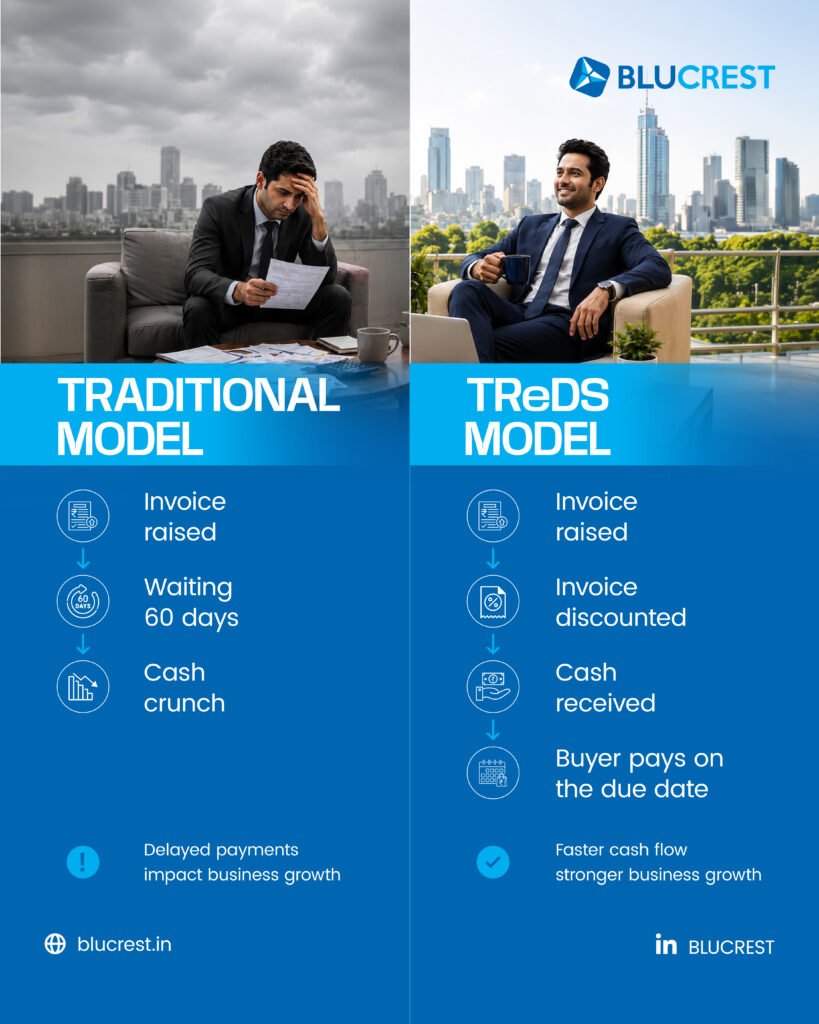
Consider a simple example.
An MSME raises an invoice of ₹10 lakh with a 60-day payment period. Under the traditional model, the business waits 2 months to receive payment.
With receivables financing, the business may be able to unlock those funds earlier, subject to eligibility and financing costs.
This shift reflects a much larger transformation in the Indian financing ecosystem.
Key MSME Financing Trends in 2026
✔ Growth in Supply Chain Finance
✔ Increasing adoption of TReDS
✔ Faster and more efficient digital lending
✔ Greater focus on creditworthiness
✔ Growth in invoice and receivables financing
✔ Increased access to unsecured financing
✔ Wider adoption of secured financing
✔ Expansion of opex and lease-based financing
The most important shift, however, is in the way businesses are thinking.
The conversation is no longer: “How much loan can we get?” It’s becoming: “How can we improve our cash flow?” “How can we unlock capital that’s already tied up in receivables?” “What financing structure is best suited to our business?“
The future of MSME financing isn’t just about gaining access to more credit. It’s about using the right financing solution at the right time, at the right cost. Because better financing doesn’t always mean borrowing more. Sometimes, it simply means managing liquidity more intelligently.
At BLUCREST, we believe that smarter liquidity management is the foundation of sustainable business growth.