Introduction:
A Budget Focused on Building Capacity, Not Just Spending.
The Union Budget 2026-27 comes at a critical juncture for India’s economy when global supply chains are being reconfigured, capital is becoming selective, and nations are competing on productivity, technology, and resilience. Presented on the auspicious occasion of Magha Purnima, the budget reflects a clear strategic shift: from short-term consumption support to long-term capacity creation.
Rather than announcing multiple small schemes, the government has chosen a capex-led, reform-oriented approach, anchored around three national duties.
- Accelerating and sustaining economic growth
- Fulfilling aspirations by building institutional and human capacity
- Ensuring inclusive development under Sabka Sath, Sabka Vikas
The budget also signals a generational reform in taxation through the introduction of the Income Tax Act, 2025, replacing the six-decade-old law and reinforcing the government’s commitment to simplicity and compliance.
Macro-Economic & Fiscal Overview:
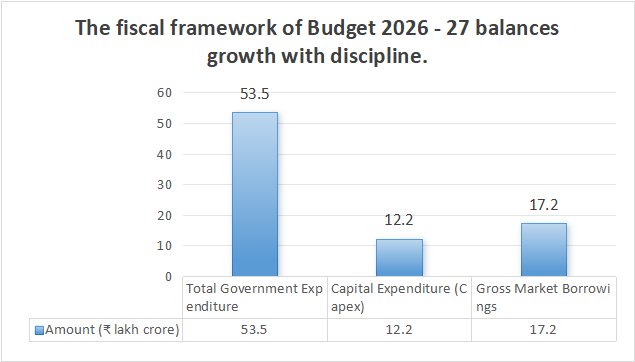
In the Union Budget 2026‑27, the fiscal deficit is targeted at 4.3% of GDP, reflecting the government’s commitment to maintaining fiscal discipline while supporting growth. Total government expenditure is projected at ₹53.5 lakh crore, with a significant focus on development spending. Of this, capital expenditure (Capex) accounts for ₹12.2 lakh crore, underscoring the emphasis on infrastructure and long-term asset creation. To finance these outlays, the government plans gross market borrowings of ₹17.2 lakh crore, balancing the need for investment with fiscal prudence and ensuring sufficient liquidity in the economy to support growth-oriented programs.
Despite global uncertainties, the government has continued its multi-year commitment to high public investment, using capex as a catalyst to crowd in private sector investment and improve long-term productivity.
Sector-wise Budget Allocation and Strategic Intent:
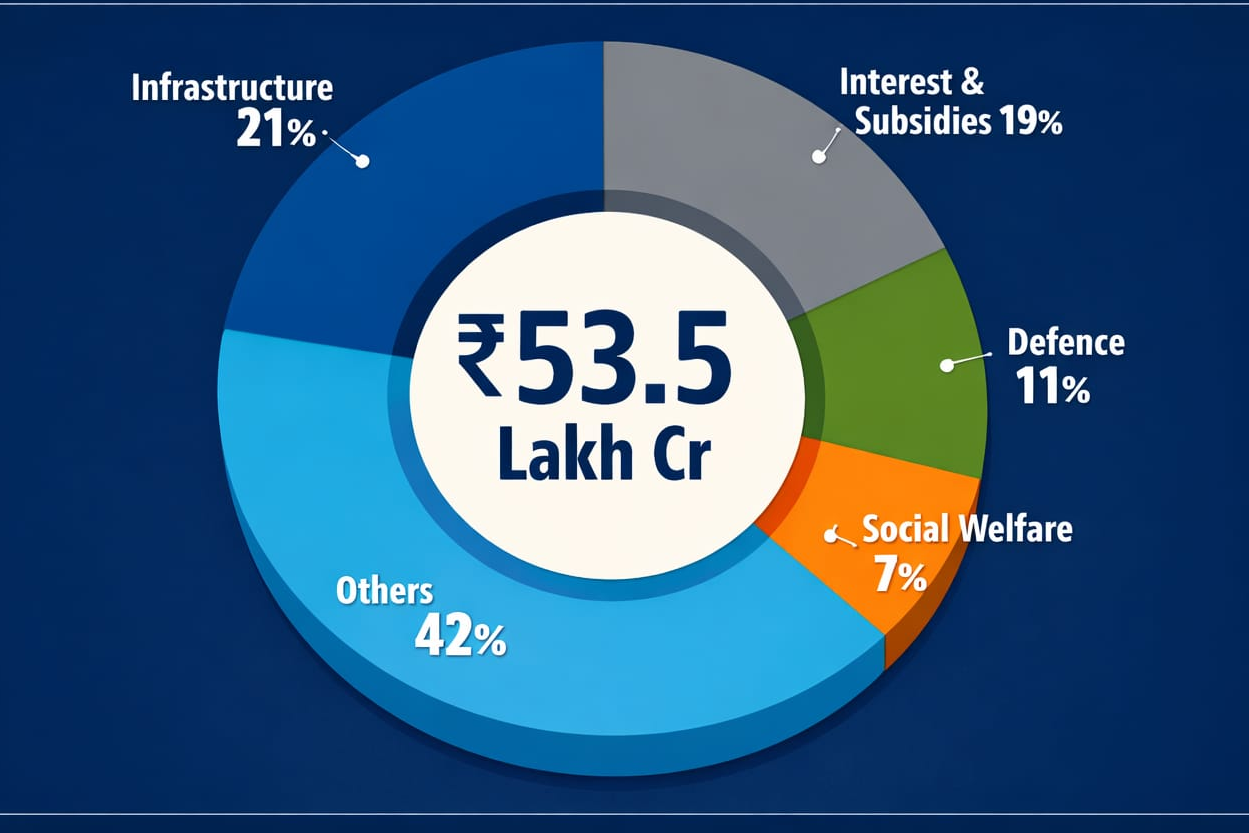
1. Infrastructure & Logistics: The Core Growth Engine
Infrastructure continues to be the single largest focus area, reflecting the government’s view that quality infrastructure is the backbone of economic competitiveness. Public capital expenditure has been increased to ₹12.2 lakh crore, the highest-ever allocation, to support development across roads, railways, ports, urban infrastructure, and energy sectors. This sustained investment aims to boost growth, create jobs, and enhance connectivity, ensuring that infrastructure development acts as a key enabler for both urban and regional economic expansion.

2. Manufacturing & Industrial Development: Strengthening Atmanirbharta
The budget deepens the government’s manufacturing push under Make in India 2.0, focusing on strategic and future-ready sectors.
- Biopharma & Healthcare Manufacturing
- Biopharma SHAKTI Scheme: ₹10,000 crore (5-year outlay)
- This scheme aims to position India as a global hub for biologics and biosimilars, supported by:
- Expansion of NIPER institutions
- Strengthening of clinical trial infrastructure
- Faster and globally aligned drug approvals
- Electronics & Strategic Manufacturing
- Electronics Components Manufacturing: ₹40,000 crore
- Continued thrust on semiconductor ecosystem development
- Critical Minerals & Rare Earths
- Establishment of Rare Earth Corridors in mineral-rich states
- Customs duty exemptions on capital goods for mineral processing
3. MSMEs & Enterprise Support: Empowering the Economic Backbone

Recognising MSMEs as the backbone of employment and entrepreneurship, the budget provides targeted support.
- Improved cash flows and working capital cycles
- Stronger balance sheets through equity infusion
- Reduced compliance burden for small businesses
- This shift from only debt support to equity-based assistance marks a structural upgrade in MSME policy.
4. Urban Development & Regional Growth:
The budget acknowledges cities as engines of growth but shifts focus towards Tier-II, Tier-III cities and temple towns.
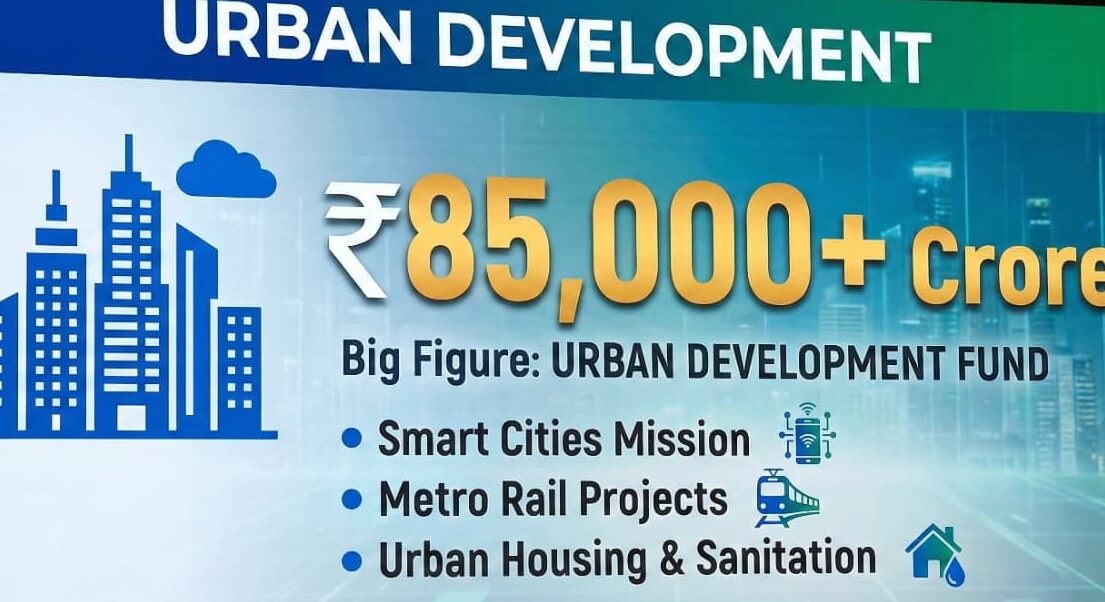
the government reiterated that cities remain critical engines of growth, but signalled a strategic shift in emphasis toward Tier-II and Tier-III cities and even temple towns that have historically lacked adequate infrastructure and basic amenities. To support decentralised urbanisation and balanced regional development, the Budget proposed the creation of City Economic Regions (CERs) with an allocation of ₹5,000 crore per CER over five years, to be utilised for enhancing urban infrastructure, improving mobility, and fostering economic clustering based on each region’s unique growth drivers. This approach is designed to ease pressure on large metropolitan centres while unlocking growth potential in emerging urban regions through targeted investments and a reform-cum-results financing mechanism.
This approach promotes decentralised urbanisation, easing pressure on mega cities while unlocking growth in emerging regions.
5. Green Energy & Climate Action:
The government is shifting focus from just using green energy to making the technology in India.
- Carbon Capture Mission: A new ₹20,000 Crore fund to help heavy industries (like steel and cement) capture emissions before they pollute the air.
- Solar Surge: ₹22,000 Crore allocated to PM Surya Ghar to fast-track rooftop solar installations for 1 crore households.
- Strategic Minerals: Establishment of Rare Earth Corridors in four states (like Odisha and Kerala) to mine materials needed for EV batteries locally.
- Tax Cuts: Customs duty reduced to 0% for nuclear power equipment and EV battery manufacturing machinery.
6. Agriculture & Rural Economy: Technology-Led Transformation
While explicit allocations are limited, policy interventions are significant.
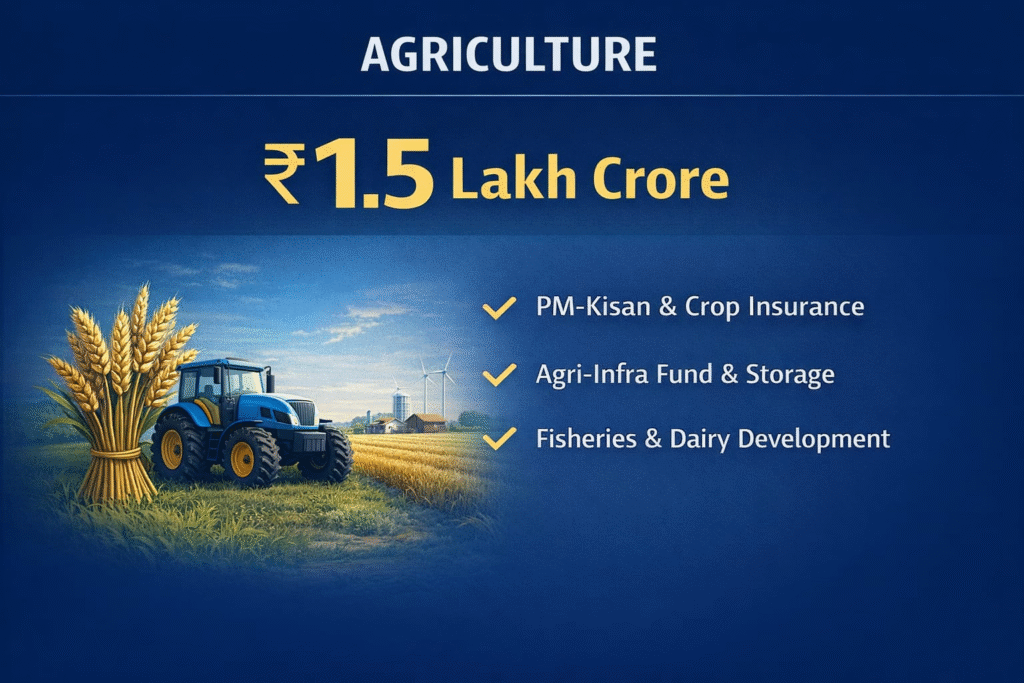
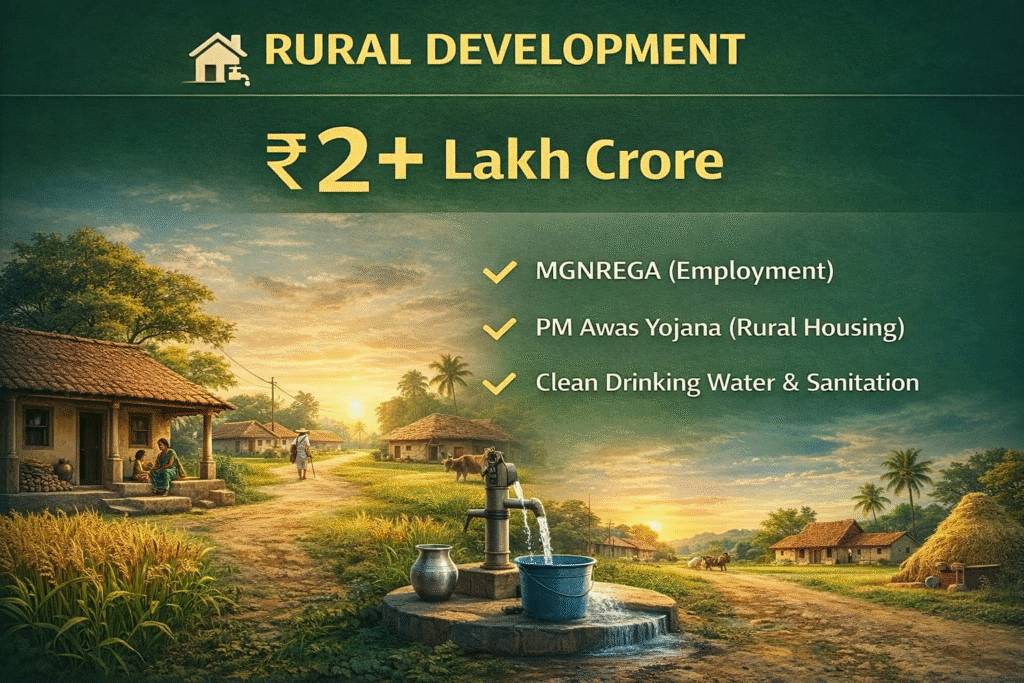
A major initiative is Bharat‑VISTAAR, a multilingual AI‑powered advisory platform designed to integrate AgriStack portals with agricultural practices and provide customised, data‑driven support to farmers to reduce risk and boost productivity. The Budget also promotes high‑value crops such as cashew, cocoa, sandalwood, and coconut through dedicated schemes to improve production, productivity, and market linkages, reflecting a focus on diversified and higher‑income agricultural activities. Additionally, efforts to enhance coconut productivity and replantation, support value chains, and expand global competitiveness are emphasised. In the fisheries sector, reforms include zero duty on marine catch from the Exclusive Economic Zone (EEZ) and facilitation of exports by treating fish landed at foreign ports as exports, along with raising duty‑free import limits for seafood export inputs—measures aimed at strengthening India’s seafood industry and expanding export potential.
The focus is on income enhancement, export orientation, and digital enablement rather than subsidies alone.
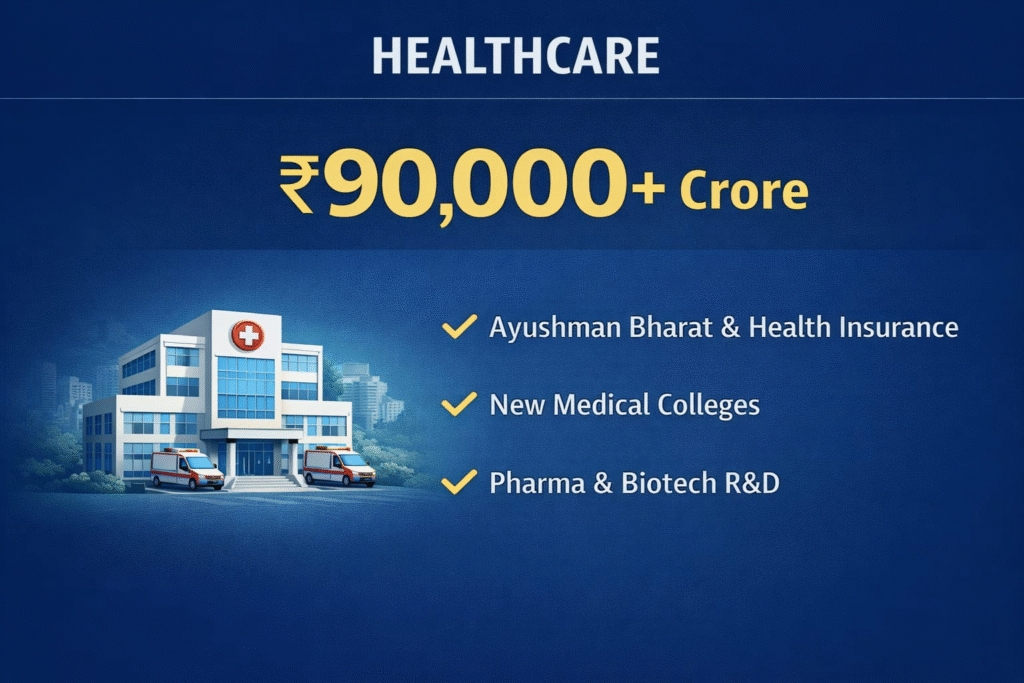
7. Healthcare & Social Infrastructure:
Key measures include the expansion of Emergency and Trauma Care Centres in district hospitals, ensuring that lifesaving services are available closer to communities, and a strategic focus on regional healthcare resilience to better prepare for public health emergencies and reduce dependency on overburdened urban hospitals. These initiatives aim to improve timely access to critical care, enhance emergency response capabilities, and reduce mortality in both routine and disaster scenarios.
8. Federal Support & Cooperative Federalism:
In the Union Budget 2026-27, the Government of India has reinforced the principles of Federal Support and Cooperative Federalism by allocating ₹1.4 lakh crore to states as Finance Commission Grants for the fiscal year 2026-27. This funding, based on the 16th Finance Commission’s recommendations and accompanying the retained 41 % vertical share of devolution, is earmarked to strengthen rural and urban local bodies, bolster disaster management preparedness, and develop grassroots infrastructure across the country. By channeling resources directly to last-mile governance institutions, these grants aim to ensure that fiscal support reaches communities effectively, enabling state and local governments to address local priorities and improve service delivery.
9. Structural Reforms & Ease of Doing Business:
The government introduced a series of structural reforms aimed at enhancing Ease of Doing Business, even where no direct budgetary allocations were made. A cornerstone of these reforms is the **rollout of the new Income Tax Act, 2025, set to come into force from April 1, 2026, which modernises and simplifies India’s tax framework to improve compliance and certainty for taxpayers and investors. The Budget also eased procedural burdens through simplified compliance measures and extended deadlines for filing revised returns, reducing friction in the tax system and lowering the scope for disputes. Additionally, Tax Collected at Source (TCS) rates were significantly reduced for education, medical expenses and overseas travel, lowering upfront cash outflows and supporting smoother financial flows for businesses and individuals alike. Collectively, these reforms are designed to boost tax certainty, transparency, and investor confidence, reinforcing India’s attractiveness as a destination for economic activity and investment.
Indian Union Budget allocations across FY 2024-25, FY 2025-26, and FY 2026-27 (in ₹ lakh crore)
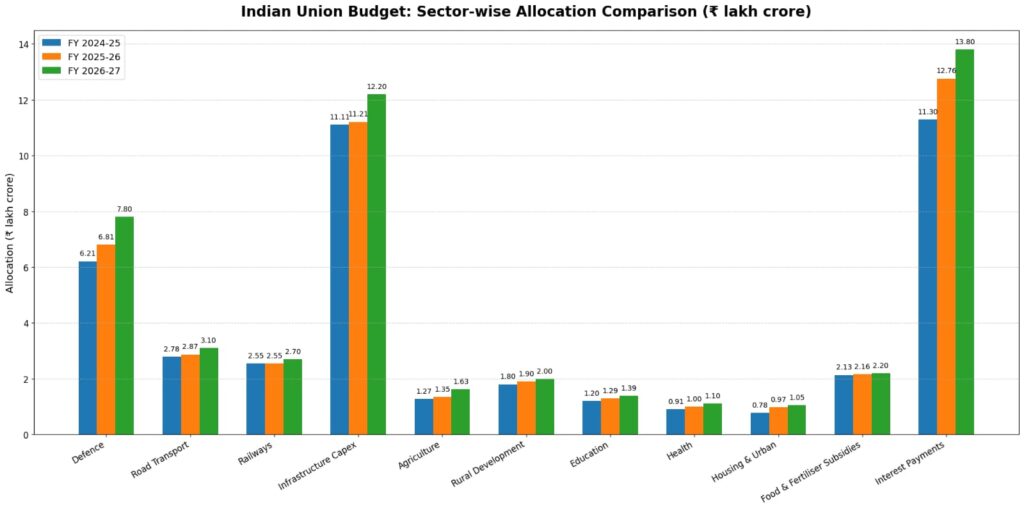
The chart presents a sector-wise comparison of Indian Union Budget allocations across FY 2024-25, FY 2025-26, and FY 2026-27 (in ₹ lakh crore). It highlights a clear upward trend in overall government spending, with Infrastructure Capex and Interest Payments emerging as the largest expenditure components. Defence shows a strong and consistent increase, reflecting strategic and security priorities. Social sectors such as Education, Health, Agriculture, and Rural Development record steady but moderate growth, indicating sustained welfare focus. Transport sectors Roads and Railways remain stable with gradual expansion. Overall, the visual underscores the government’s emphasis on capital investment, fiscal consolidation, and balanced sectoral development over the three-year period.
Conclusion: A Budget Designed for the Next Decade
The Union Budget 2026-27 is a forward-looking and strategic budget aimed at building India’s long-term economic capacity rather than focusing on short-term stimulus. Infrastructure remains the central focus, with public capital expenditure increased to ₹12.2 lakh crore, targeting roads, railways, ports, urban mobility, energy, and logistics networks to enhance connectivity, reduce costs, and boost trade efficiency. The budget also emphasizes manufacturing and MSMEs, promoting domestic production, entrepreneurship, employment generation, and global competitiveness. Green technologies and sustainable development are prioritized through investments in renewable energy, green manufacturing, and energy efficiency. Urban development focuses on Tier-II, Tier-III cities, and temple towns, with City Economic Regions (CERs) allocated ₹5,000 crore each over five years to improve infrastructure, mobility, and regional economic clustering, fostering decentralized urbanization and easing pressure on megacities. Healthcare capacity is strengthened through the expansion of emergency and trauma care in district hospitals and a focus on regional healthcare resilience, while Finance Commission Grants of ₹1.4 lakh crore support local governance, grassroots infrastructure, and disaster management.
In agriculture, initiatives include the Bharat-VISTAAR AI advisory platform, promotion of high-value crops, coconut productivity programs, and fisheries export reforms. Structural reforms, including the Income Tax Act, 2025, simplified compliance, and reduced TCS on education, medical expenses, and travel, enhance tax certainty, transparency, and investor confidence. Together, these measures lay a strong foundation for sustainable and inclusive growth, setting India on a trajectory toward Viksit Bharat 2047, a fully developed, resilient, and globally competitive economy.