
Prologue
- Corporate debt markets play a crucial role in financing business expansion, investment, and economic growth. Rising corporate leverage and increasing debt obligations are creating concerns about financial sustainability and credit risk across global markets.
- Evolving debt covenant structures, growing private credit markets, and changing lender protections are reshaping corporate financing risks.
- Fluctuating interest rates and tightening credit conditions are increasing borrowing costs and refinancing pressures for corporations. Companies with high debt levels and upcoming maturities face greater challenges in maintaining liquidity.
Introduction to Corporate Debt Markets
Corporate debt markets play a vital role in the global financial system by enabling businesses to raise capital through bonds, loans, and other debt instruments. These markets support business expansion, operational funding, and long-term investment across industries. Changing interest rates, rising corporate leverage, and evolving credit conditions significantly influence borrowing costs and debt sustainability. Increasing refinancing pressures and debt repayment obligations have heightened concerns about corporate financial stability. Effective debt management and access to financing remain essential for maintaining corporate resilience and supporting sustainable economic growth.
Importance of Effective Debt Management
Maintaining Financial Stability: Effective debt management helps corporations maintain financial stability by balancing borrowing levels, managing repayment obligations, and reducing the risk of financial distress.
Optimizing Borrowing Costs: Strategic debt management enables companies to minimize interest expenses, manage exposure to interest rate fluctuations, and maintain an optimal capital structure.
Mitigating Refinancing and Liquidity Risks: Proper debt planning helps corporations manage upcoming debt maturities, maintain adequate liquidity, and reduce refinancing pressures during periods of market uncertainty.
Strengthening Creditworthiness and Investor Confidence: Effective debt management supports stronger credit ratings, ensures compliance with debt covenants, and enhances investor and lender confidence, improving access to capital markets.
Corporate Leverage Levels & Debt Sustainability
Corporate leverage refers to the extent to which companies rely on borrowed funds to finance their operations and expansion. Maintaining sustainable debt levels is essential for ensuring financial stability, managing borrowing costs and meeting repayment obligations.
Key factors influencing corporate leverage and debt sustainability include:
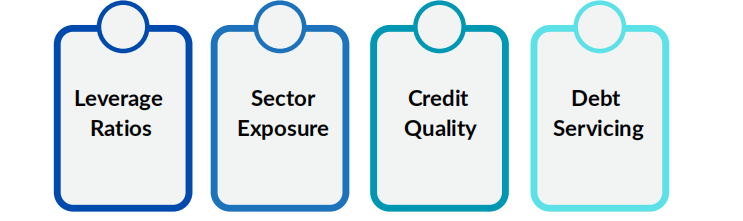
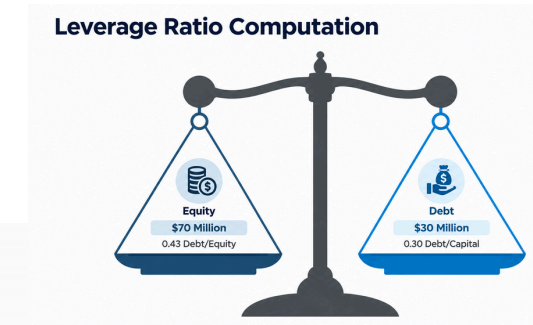
Current Corporate Debt-to-Equity and Debt-to-EBITDA Ratios: The Debt-to-Equity ratio measures a company’s total debt relative to shareholders’ equity, while the Debt-to-EBITDA ratio assesses debt obligations against operating earnings. Higher ratios generally indicate greater financial leverage and potential repayment risks. These indicators help investors and lenders evaluate a company’s financial strength and debt sustainability.
Rising Leverage Across Sectors and Credit Ratings: Corporate leverage varies across industries depending on capital requirements, business models and financing needs. Capital-intensive sectors such as real estate, infrastructure and telecommunications often rely heavily on debt financing. Companies with weaker credit ratings may face greater financial pressure due to higher borrowing costs and limited refinancing options.
Investment-Grade vs. High-Yield Borrowers: Investment-grade companies generally maintain stronger credit profiles, more stable earnings and better access to affordable financing. In contrast, high-yield borrowers carry greater credit risk and typically pay higher interest rates to compensate investors. During periods of market uncertainty, high-yield companies may experience increased refinancing challenges and liquidity constraints.
Debt Servicing Capacity and Interest Coverage Ratios: Debt servicing capacity reflects a company’s ability to meet interest payments and principal repayments through operating cash flows. The Interest Coverage Ratio, commonly calculated as EBIT divided by interest expense, indicates how comfortably a company can meet its interest obligations. A declining ratio signals increasing financial pressure and potential debt sustainability concerns.
Types of Corporate Debt Instruments
Corporate debt instruments are financial obligations issued or entered into by companies to raise capital for business operations, expansion, acquisitions, refinancing, and working capital requirements.
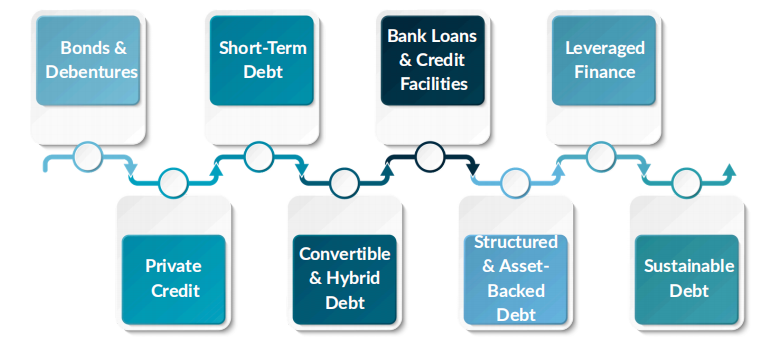
1. Corporate Bonds and Debentures: Debt securities issued by companies to raise capital from investors for business expansion, operations, or refinancing. These instruments generally offer fixed or floating interest payments and repayment of principal at maturity.
2. Short-Term Corporate Debt Instruments: Debt instruments used by companies to meet short-term funding needs, such as working capital and operational expenses. Common examples include commercial paper, short-term notes, and working capital loans.
3. Bank Loans and Credit Facilities: Financing provided by banks or financial institutions to companies for short- or long-term funding requirements. These include term loans, syndicated loans, revolving credit facilities, & project financing.
4. Leveraged Finance Instruments: Debt instruments primarily used by companies with relatively high debt levels or for financing acquisitions and leveraged buyouts. These typically carry higher credit risk and borrowing costs, including leveraged loans, high-yield bonds, and mezzanine debt.
5. Private Credit Instruments: Debt financing provided directly by non-bank financial institutions, private debt funds, and alternative investment managers. These instruments offer customized financing solutions, including direct lending, venture debt, and asset-based lending.
6. Convertible and Hybrid Debt Instruments: Financial instruments that combine features of debt and equity, allowing investors to receive interest payments with potential equity participation. Examples include convertible bonds, exchangeable bonds, and hybrid capital securities.
7. Structured and Asset-Backed Debt Instruments: Debt instruments supported by underlying financial assets, receivables, or specific cash flows. These structures help companies access financing and transfer certain financial risks through instruments such as asset-backed securities (ABS) and collateralized loan obligations (CLOs).
8. Sustainable and ESG-Linked Debt Instruments: Debt instruments designed to finance environmentally or socially beneficial projects or encourage companies to achieve sustainability targets. Examples include green bonds, social bonds, sustainability-linked bonds, and green loans.
Refinancing Risk
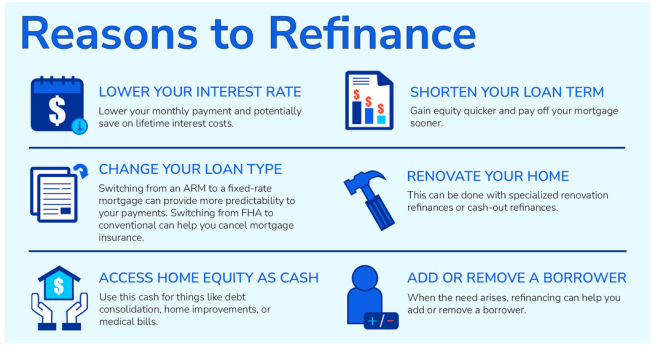
Refinancing risk is the risk that a company may be unable to replace its existing debt with new financing when the debt matures, or may only be able to do so at higher interest rates or on less favorable terms.
It encompasses the danger of a company’s inability to fulfill its loan obligations and is relevant to individuals, organizations, banks, and financial institutions.
Interest Rate Pressures & Refinancing Risks
Interest rate developments and refinancing conditions remain important determinants of corporate financial resilience, particularly for highly leveraged borrowers and companies with significant upcoming debt maturities. Changes in monetary policy, government bond yields, and credit spreads influence corporate borrowing costs, debt servicing obligations, and access to financing.
Companies with substantial floating-rate debt exposure are particularly sensitive to changes in benchmark interest rates, while those with fixed-rate obligations may experience increased borrowing costs as existing debt matures and is refinanced at prevailing market rates. Higher interest expenses can weaken profitability, constrain cash flow generation, and reduce financial flexibility, particularly among companies with elevated leverage and limited liquidity buffers.
Assume a company has $500 million of debt maturing, previously financed at 3%.
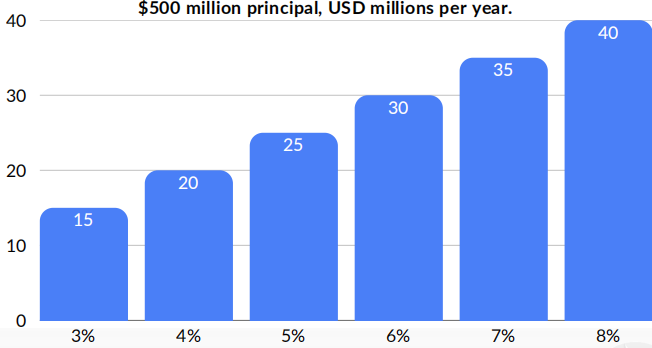
Refinancing $500 million of debt at 7% instead of 3% increases annual interest expenses by $20 million, reducing cash flow available for investment and operations.
Debt Covenant Trends & Credit Risk
Debt covenants are contractual conditions included in loan agreements and bond indentures to protect lenders and ensure that borrowers maintain acceptable financial and operational standards. These provisions help monitor corporate financial performance, restrict excessive borrowing and reduce potential credit risks. Changes in covenant structures, particularly the use of covenant-lite lending, have influenced lender protections and corporate debt management practices.
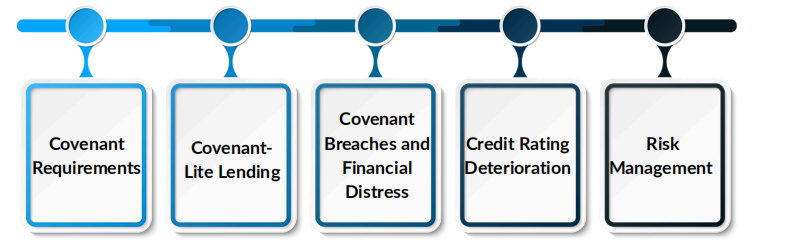
Key factors influencing debt covenant trends and credit risk include:
Financial Covenant Requirements: Financial covenants set limits on leverage, interest coverage and liquidity to ensure companies maintain financial discipline. These requirements help lenders assess repayment capacity and identify early signs of financial stress.
Growth of Covenant-Lite Lending: Covenant-lite loans provide borrowers with greater financial flexibility by reducing traditional maintenance requirements. However, weaker lender protections may delay intervention and increase potential credit losses during financial distress.
Covenant Breaches and Financial Distress: Covenant breaches occur when companies fail to meet agreed financial conditions, often due to declining earnings or increasing debt burdens. Such violations may result in loan amendments, lender negotiations or debt restructuring.
Credit Rating Deterioration and Default Risk: Weakening financial performance and rising debt obligations can lead to credit rating downgrades, higher borrowing costs and restricted financing access. These conditions increase refinancing challenges and the likelihood of corporate defaults.
Risk Management and Lender Protection: Regular covenant monitoring, financial assessments and adequate collateral help lenders identify emerging credit risks. Early intervention and proactive debt management can reduce financial losses and support long-term stability.
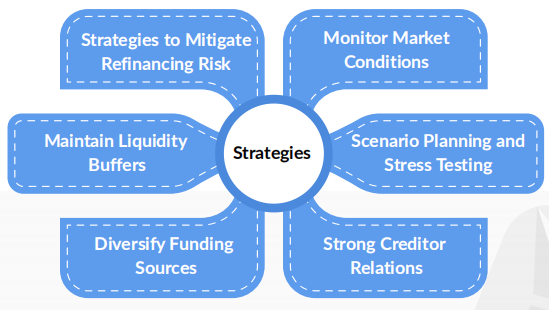
Strategies to Mitigate Refinancing Risk
Implications for Financial Stability
Corporate debt levels and refinancing pressures play a significant role in determining financial stability. High leverage, elevated borrowing costs and deteriorating credit conditions can increase financial vulnerabilities, affecting businesses, financial institutions and the broader economy.
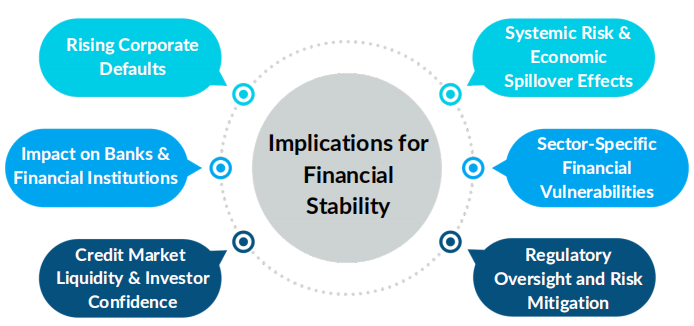
Elevated corporate leverage, refinancing pressures and increasing credit risks can threaten financial stability by weakening corporate balance sheets, increasing lender losses and disrupting credit availability. Effective risk management and regulatory oversight are essential for maintaining financial resilience.
Conclusion
Corporate debt markets play a vital role in supporting business growth and economic development; however, elevated leverage levels, interest rate pressures and refinancing challenges pose significant risks to financial stability. Rising borrowing costs and upcoming debt maturities can weaken corporate cash flows, particularly for highly leveraged and lower-rated borrowers. Evolving debt covenant structures and deteriorating credit conditions further increase the potential for financial distress and defaults.